
Treating Cats for Parasites: How to Protect Your Cat from Fleas and Ticks in the Spring

Treating Cats for Parasites: How to Protect Your Cat from Fleas and Ticks in the Spring

Spring treatment of cats against parasites is a mandatory procedure even for pets that never leave the apartment. The best solution for protecting cats is the use of specialized veterinary AnimAll VetLine products, which contain safe active ingredients (imidacloprid, fipronil, eprinomectin, praziquantel) that provide comprehensive protection against ixodid ticks, ear mites, fleas, lice, and helminths.

Why doesn’t “home comfort” protect from parasites?

Early April is the period of peak parasite activity. Owners often make the mistake of considering “indoor” cats protected. Flea eggs enter the home on your shoes or clothing. What to treat cats with for ticks and fleas should be decided already now, as parasites are carriers of dangerous diseases and helminths. Remember that indoor cats do not have natural immunity to outdoor infections, so a single bite can cost your pet its health and you — stress and expenses for treatment.

Types of parasites and their danger


The spring season is accompanied by an increase in the number of parasites. There are ectoparasites (fleas, ticks) that are localized on the skin) and endoparasites (helminths), which are localized in internal organs, cells, or tissues). To ensure full protection, it is important to identify the key threats:

Ixodid ticks

  • Why they are dangerous: Unlike dogs, cats are less likely to suffer from babesiosis, but they are vulnerable to borreliosis (Lyme disease).
  • Consequence: The disease causes lethargy, loss of appetite, lameness, and fever. Without timely protection provided by tick treatments for cats, the disease may progress unnoticed to a critical stage.

Fleas and lice

  • Why they are dangerous: The main problem is not the bite itself, but the saliva of the insects. It contains proteins that cause flea allergic dermatitis (FAD).
  • Consequence: Even one flea can trigger a cascade reaction: the cat scratches itself to bloody wounds, bald patches appear, and secondary bacterial skin infections develop.

Chewing lice

  • Why they are dangerous: These small parasites do not drink blood but literally “consume” your pet, feeding on epidermal scales and hair keratin.
  • Consequence: The coat becomes dull, brittle, and falls out in patches. The animal experiences constant exhausting itching.

Ear mites / Otodectes

  • Why they are dangerous: Microscopic mites settle in the ear canal, causing severe inflammation — otodectosis.
  • Consequence: Constant head shaking, black discharge in the ears, and risk of purulent otitis.


Comparative table of parasites

Parasites Main symptoms Danger level AnimAll VetLine solution
Ixodid ticks Itching, redness, lethargy, loss of appetite, fever High ProSafe drops, AnimAll VetLine collar
Fleas Sudden scratching, itching, black crumbs on the coat, scabs, skin redness, hair loss Medium (allergy, helminths) Spot-On drops
Ear mites The cat scratches its ears, tilts its head Medium (otitis) ProSafe drops
Chewing lice Deterioration of coat quality, dandruff Moderate (dermatitis) Wicker collar

Modern requirements for veterinary products

Cats have a unique metabolism that makes them extremely sensitive to certain groups of chemical substances. In particular, the use of permethrin-based products is critically dangerous for them and can lead to fatal intoxication.

That is why the AnimAll VetLine for cats line is developed with strict adherence to the safety profile. The formulas of the products are based on active ingredients trusted by veterinarians (imidacloprid, eprinomectin, fipronil, praziquantel), which demonstrate high neurotoxicity for parasites while remaining максимально inert and gentle for the cat’s body.

Active ingredients and mechanism of action

Active ingredient Mechanism of action Protection spectrum
Imidacloprid Blocks the nerve receptors of parasites Fleas, lice, chewing lice
Fipronil Destroys ticks through contact Ixodid ticks
S-methoprene Insect growth regulator (disrupts the normal metamorphosis cycle of insects) Prevention of re-infestation by fleas
Eprinomectin Acts on the neuromuscular system of helminths Nematodes (helminths)
Praziquantel Acts on the neuromuscular system of helminths Tapeworms (helminths)

Professional protection arsenal of AnimAll VetLine

The choice of protection form depends on the cat’s lifestyle: whether it goes outdoors, how dense its coat is, and whether there is a need for simultaneous prevention against fleas, ticks, and helminths.

Antiparasitic collars: Long-lasting remote defense

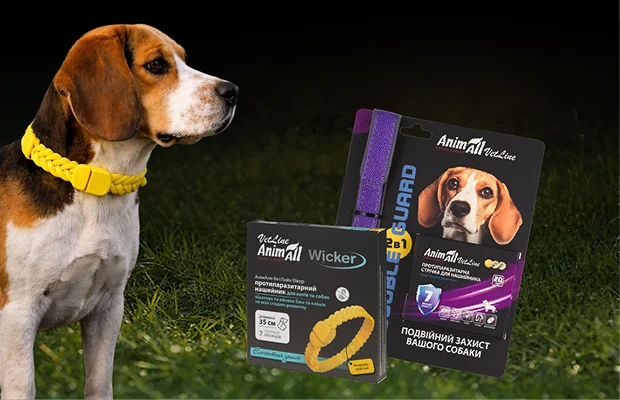
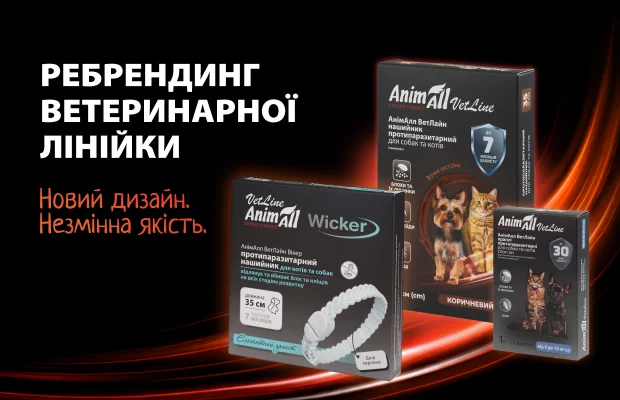
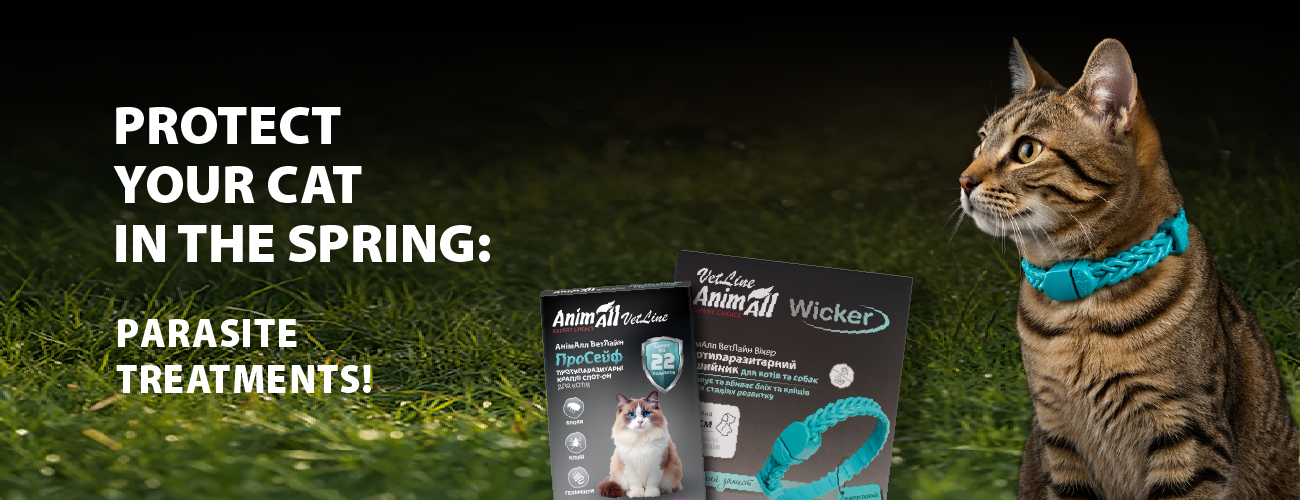
  • AnimAll VetLine (35 cm) — Classic barrier
    • Combination of active ingredients imidacloprid and flumethrin. The substances are contained within the collar matrix and gradually spread over the lipid (fat) layer of the animal’s skin, providing contact action — the tick dies while on the animal’s coat.
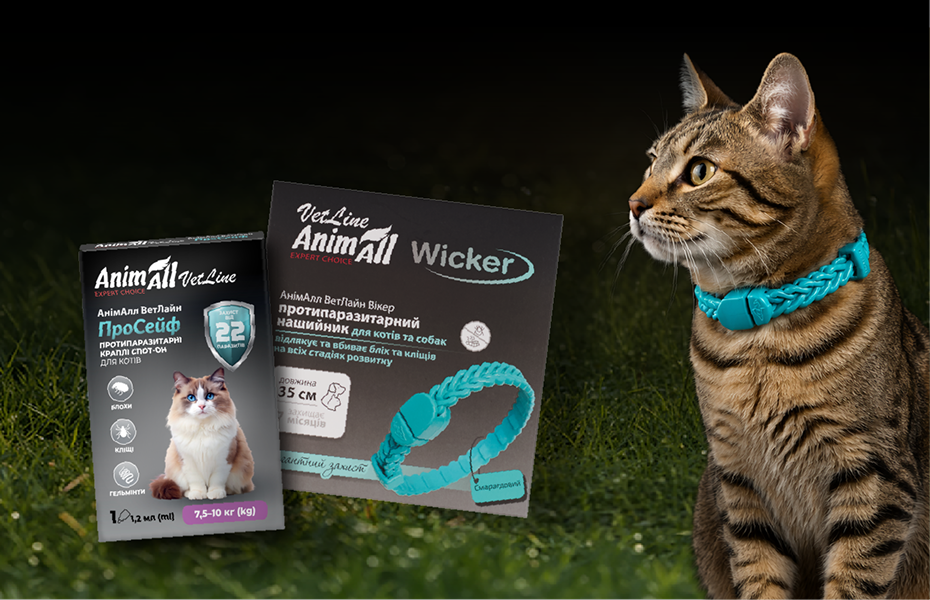
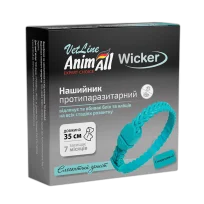
  • AnimAll VetLine Wicker (35 cm) — Enhanced formula
    • Thanks to the unique “woven” design, the release area of active components increases. An ideal flea and tick collar for cats for additional protection against parasites.

Spot-On drops: Maximum precision and comprehensive protection

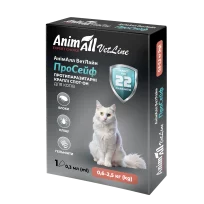
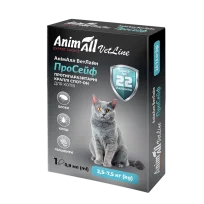
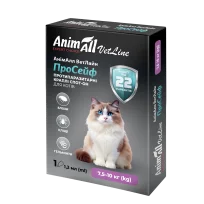
  • AnimAll VetLine ProSafe — Ultimate 4-in-1 protection
    • A combination of a powerful cocktail of fipronil, S-methoprene, eprinomectin, and praziquantel. This is not just flea and tick drops for cats, but a full deworming solution. They eliminate fleas, ticks (including ixodid and ear mites), as well as helminths. No need to struggle with pills anymore — one spot-on application at the withers solves all issues of internal and external parasites.
  • AnimAll VetLine Spot-On — Precision action against fleas
    • The action of imidacloprid is real “first aid”. Within 12 hours after application, up to 99% of all fleas on the animal are eliminated. The best choice if the cat shows signs of flea allergic dermatitis and immediate action is required.

How to properly treat a cat: expert advice

Even the most expensive flea and tick treatment for cats will not work at 100% if mistakes are made during application. Cats are extremely clean animals, so the main task of the owner is to ensure that the product reaches its intended place, not the animal’s stomach.


Step-by-step algorithm for applying products:

  1. Choosing the correct location (The “inaccessible point”)
    The product is applied to areas inaccessible for licking. For cats, these are the base of the skull and the area between the shoulder blades (withers). If the animal is very flexible or large, the product can be applied in 2–3 points along the spine, but only up to the middle of the back.
  2. Skin contact
    AnimAll VetLine products work through the lipid layer of the skin. Therefore, it is important to carefully part the fur and apply the solution directly to the skin, not the coat.
  3. Absorption control Do not rub the product with your fingers! It must be absorbed naturally. After application, a wet mark may remain on the coat — this is normal for combined products such as AnimAll VetLine ProSafe.


    Critical post-treatment rules:

  • First 2 hours: Do not allow children or other animals to touch the cat at the treatment site.
  • First 48 hours: Avoid bathing the pet in a bath or natural water bodies. Contact with water before the product is fully fixed in the sebaceous glands will reduce the effectiveness of protection by 30–50%.


Products AnimAll VetLine use the lipid mantle of the skin as a "transport network". Proper application ensures that after 24 hours every hair on the cat’s body will be protected from parasite bites.

Conclusion

If your cat goes outdoors or travels to the countryside — choose the AnimAll VetLine collar (a combination of imidacloprid and flumethrin) for long-lasting protection. For indoor cats that require regular prevention of fleas and helminths at the same time, the best choice will be ProSafe drops. Timely treatment is the peace of mind of your purring pet and the cleanliness of your home!


Related Products

Related Articles